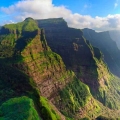
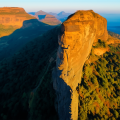
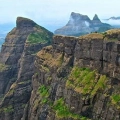
Today’s trek began in the quaint village of Patadwadi, the base village of Nhavigad Fort, It is located in the Baglan area of Nashik district. There are two main hill ranges in Baglan area the Selbari range and Dholbari range. These two ranges run parallel to each other in east-west direction. Nhavigad is located in Selbari mountain range. Unlike popular forts buzzing with crowds, Nhavigad remains untouched and rarely visited, giving every trekker a raw, offbeat experience.
As we geared up in the cool morning air, excitement was in the air this was not just a trek, but an exploration of a forgotten gem from the Sahyadris.
History of Nhavigad Fort
Though not as widely known as Salher or Mulher, Nhavigad Fort holds great strategic importance. Located near the Satmala mountain range, this fort was used as a watchtower to monitor surrounding regions, especially during Maratha and Mughal conflicts.
In the records it is written that there was a fierce battle in 1439 between Bahamani king and the King of Gujarat at the base of the Nhavigad and adjoining Tambolya hill. Both sides received huge losses, hence both sides receded from the battleground at night.
Locals also share stories of the fort being spiritually significant, with the temple of Saptashringi Devi built high on the plateau, facing the majestic Sahyadris. With minimal ruins left, the real tale of Nhavigad is now told through its rugged stones, caves, and breathtaking geography.
The Trek Route
The path from Patadwadi to the summit of Nhavigad is as beautiful as it is challenging.
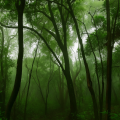
We began our ascent through a path covered thick shrubs. The trail isn’t marked, and there are no signboards making it essential to trek with a local guide or someone with prior experience. The first stretch sets the tone, testing your endurance as you make your way toward the rocky midsection.
After the forest patch, we emerged onto a plateau where the Saptashringi Devi Temple stands a divine and peaceful spot offering magnificent views of the surrounding terrain. Right in front, the distinctive rock formation known as Tambolya Sulka appears standing tall like a tooth-shaped pillar carved by nature.
As we moved ahead, the trail led us to hidden caves carved into the mountain likely ancient shelters for ascetics or soldiers. Small water reservoirs also appeared, some still holding water even during the off-monsoon season, showing ancient water management techniques.
This was the most challenging part of the trek. Steep, slippery paths with loose rocks and barely any grip the trail demands both caution and determination. Small footholds and natural ridges offer some support, but this is where the real thrill lies. Step by step, breath by breath we ascended the final face of Nhavigad.
On Top of Nhavigad – A View Like No Other
Reaching the top felt like a true victory. The summit is relatively small but gives 360° panoramic views of the surrounding Sahyadri giants.
You can spot Salher Fort and Mulher Fort standing proudly in the distance.
Remains of water tanks and carved structures hint at the fort’s historic life.
Cool breezes and peaceful silence make it a perfect spot to rest and reflect.
Standing here, we listened to stories about the fort’s location, its strategic position between Dang Forest (Gujarat side) and Nashik district, and how it formed part of the regional defense during the Maratha Empire.
Final Thoughts
Nhavigad Fort is more than just a trek – it’s an offbeat, spiritual, and wild adventure into nature and forgotten history. With very few people knowing about this place, it’s a paradise for true explorers looking to escape crowded trails.
If you’re someone who loves lesser-known treks, raw mountain beauty, and challenging climbs, then Nhavigad Fort should be next on your Sahyadri bucket list.